Turn Every Call into a Conversion with QuickVoice AI
Unlock the power of conversational AI. Transform your customer engagement with QuickVoice's cutting-edge AI call software solutions. Our innovative technology enables seamless inbound and outbound AI voice interactions that feel like human conversations.
Live AI Voice Demo
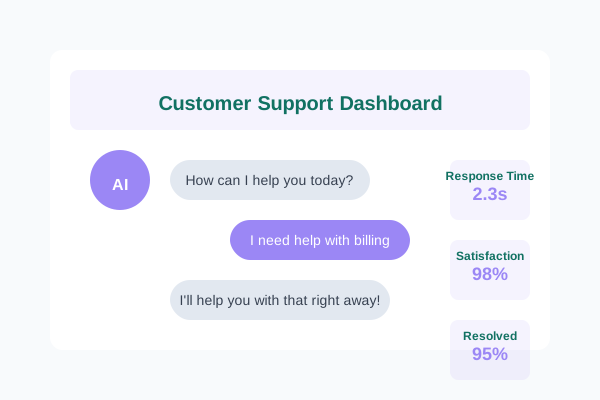
Customer Support
Instant resolution of queries
Boost Sales
Drive conversions and growth
Team Efficiency
Focus on high-value tasks
Enterprise Security
Bank-level security standards
Revolutionize Customer Support and Sales
Our Conversational AI solutions can transform your business operations and customer engagement strategies.
Revolutionize Customer Support and Sales
Our AI voice agents are designed to empower your teams to be more productive. With QuickVoice, your agents can type less and write more, focusing on high-value tasks that drive conversions.
- Resolve common customer queries instantly, reducing ticket volume and enhancing customer satisfaction
- Engage prospects through personalized outreach and qualification, boosting sales and lead generation
- Streamline appointment scheduling and handle reminders or payment collections proactively, improving operational efficiency
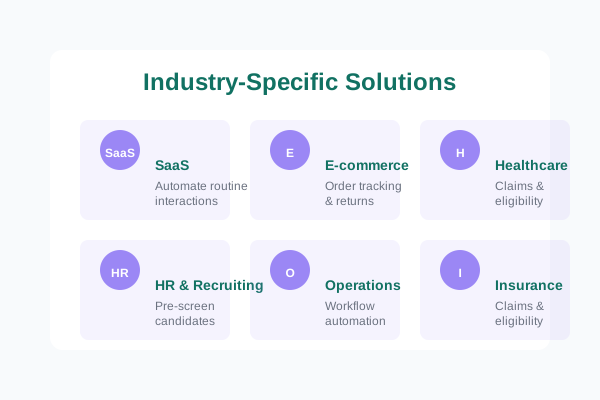
Tailored for Every SaaS, Across Every Industry
No matter what SaaS product you build or the industry you serve, QuickVoice adapts to your unique workflows. Our generative AI voice agents are built to deliver industry-specific solutions that drive efficiency, engagement, and growth.
- SaaS: Automate routine interactions, boost efficiency, and elevate customer experiences
- E-commerce & Logistics: Provide real-time order updates, returns support, and delivery tracking
- Insurance & Healthcare: Streamline claims, eligibility checks, and appointment confirmations
- HR & Recruiting: Pre-screen candidates with natural, conversational interviews
- Operations Automation: Optimize workflows by integrating directly with your back-end systems
Discover the Benefits of QuickVoice
Drive efficiency and reduce costs
Automate routine tasks and reduce operational overhead with AI-powered voice agents.
Enhance customer experiences and boost conversions
Provide instant, personalized support that keeps customers engaged and satisfied.
Empower your teams to focus on high-value tasks
Free up your human agents to handle complex issues while AI manages routine interactions.
Proven Results with AI Call Software
Experience the future of customer engagement with QuickVoice's AI call software solutions. Discover how our Conversational AI can transform your business today.
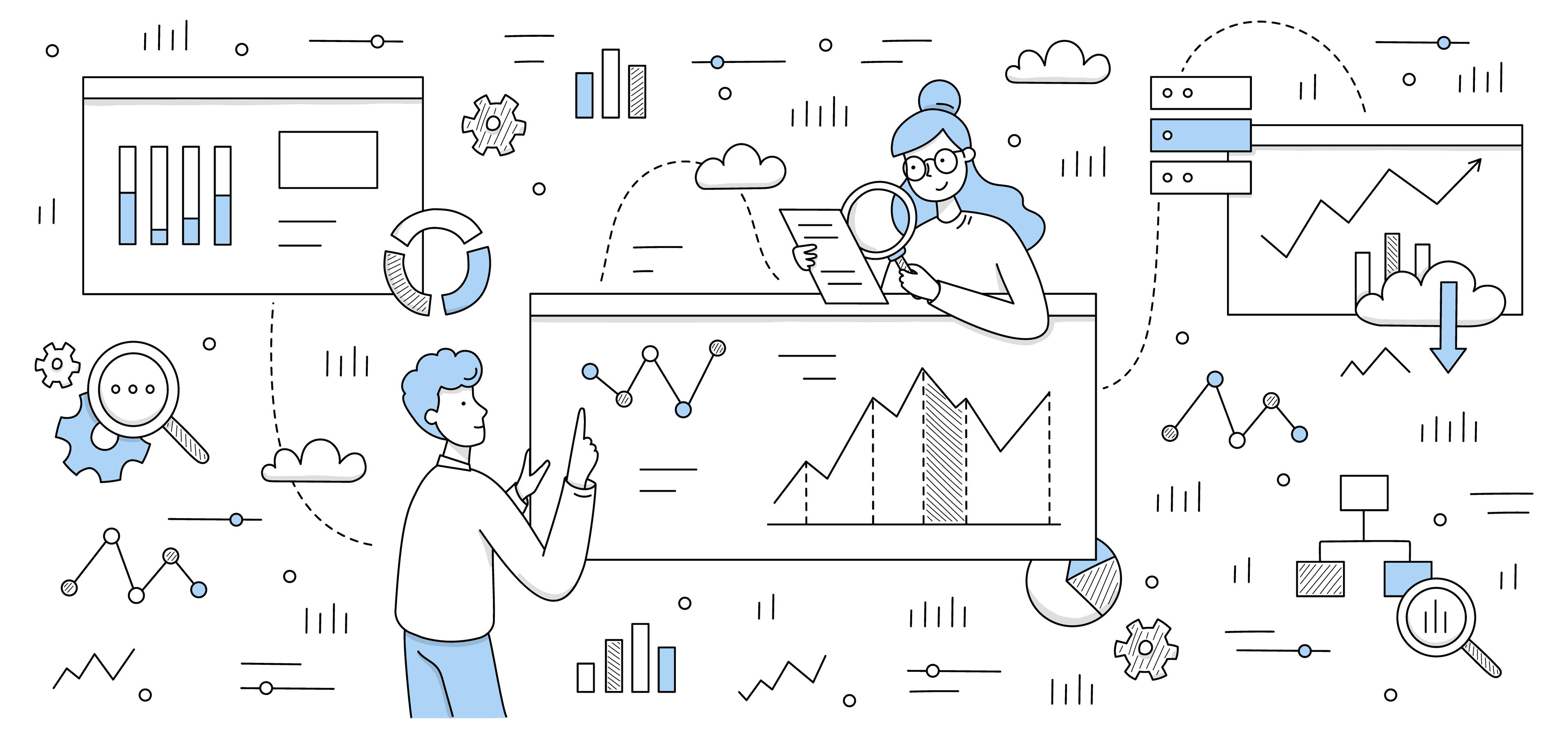
Advanced Analytics & Insights
Get comprehensive analytics on customer interactions, call performance, and conversion rates to optimize your AI voice agents.
Enterprise-Grade Security
Built with security-first principles, ensuring your customer data is protected with end-to-end encryption and compliance standards.

Lightning-Fast Deployment
Deploy your AI voice agents in minutes, not months. Our no-code platform makes it easy to get started immediately.

Frequently Asked Questions
Everything you need to know about using AI voice agents in the SaaS industry
Ready to Transform Your SaaS Customer Experience?
Experience the future of customer engagement with QuickVoice's AI call software solutions. Discover how our Conversational AI can transform your business today.
The SaaS Customer Communication Problem
SaaS businesses live and die by their NRR (Net Revenue Retention). Every churned customer represents not just lost ARR but also the acquisition cost that was never recovered. Customer success teams are the front line of churn prevention — but they're fighting a losing battle against scale.
A customer success manager can handle 30–50 accounts in a high-touch model. At 500 accounts, you need 10–15 CSMs. At 5,000 accounts, the math becomes untenable. Most SaaS companies solve this by segmenting customers into high-touch (enterprise, large accounts), mid-touch (SMB), and tech-touch (self-serve). Tech-touch customers — often the majority of the account base by count — receive automated emails and in-app prompts but almost never a human conversation.
AI voice agents fill the human conversation gap at scale, enabling SaaS companies to have real conversations with every customer segment without proportional headcount.
SaaS Use Cases for AI Voice Agents
Onboarding Calls
The first 90 days determine whether a SaaS customer succeeds or churns. AI agents conduct structured onboarding calls:
- Welcome call within 24 hours of account creation
- Setup progress check-in at Day 7: "Have you completed the initial configuration? Is there anything you're stuck on?"
- Value milestone call at Day 30: "How has [Product] been working for your team? Have you seen the outcomes you were hoping for?"
- Quarterly business review scheduling for enterprise customers
SaaS companies using AI onboarding calls see 20–35% lower churn in the first 90 days.
Churn Risk Outreach
When usage drops, support tickets spike, or a renewal approaches without the usual engagement signals, AI agents proactively call at-risk customers:
- "Hi, I noticed your team's usage has decreased over the past few weeks. I wanted to reach out personally to understand if there's anything we can help with."
- Identify root cause (product issue, team change, budget, competing solution)
- Attempt resolution or escalate to a human CSM for high-value accounts
- Offer success resources, training, or account optimization session
Renewal and Upsell Conversations
AI agents handle renewal outreach for the SMB and mid-market segments:
- Renewal reminder calls 60 and 30 days before contract end
- Upsell conversations when usage patterns indicate a customer would benefit from a higher tier
- Competitive defense when a customer mentions evaluating alternatives
NPS and Customer Health Surveys
Instead of a generic email NPS survey (average 10–15% response rate), AI agents call customers for voice NPS:
- Higher response rates (35–50%)
- Richer qualitative feedback (customers explain their score)
- Immediate escalation for detractors (score 0–6 triggers a human callback within 24 hours)
Support Escalation Triage
When customers call support, AI agents:
- Diagnose the issue with structured questions
- Attempt self-service resolution for known issues (check status page, direct to documentation)
- Collect full context before transferring to a technical support agent
- Reduce average handle time for human agents by 40%
SaaS Metrics Impacted by AI Voice Agents
| Metric | Before AI | After AI | Change |
|---|---|---|---|
| Onboarding completion rate | 55% | 78% | +42% |
| 90-day churn rate | 12% | 7.2% | -40% |
| NPS survey response rate | 12% | 44% | +267% |
| Renewal rate (SMB) | 72% | 85% | +18% |
| CSM account capacity | 45 accounts | 80 accounts | +78% |
| Support CSAT | 71% | 83% | +17% |
Integration with SaaS Tech Stack
CRMs: Salesforce, HubSpot, Pipedrive Customer Success Platforms: Gainsight, ChurnZero, Totango, Planhat Support Platforms: Zendesk, Intercom, Freshdesk Product Analytics: Mixpanel, Amplitude, Heap Billing: Stripe, Chargebee, Recurly, Zuora
When QuickVoice is connected to your product analytics platform, usage data triggers AI outreach automatically. A customer who hasn't logged in for 14 days automatically receives an AI check-in call. A customer who just hit their usage limit receives an AI upsell conversation.
Product-Led Growth and AI Voice
Product-led growth (PLG) has become the dominant go-to-market strategy for modern SaaS companies. The model relies on the product itself driving acquisition, activation, and expansion. But PLG has a well-documented conversion gap: free trial and freemium users who show strong product engagement but never convert to paid plans. Industry benchmarks put free-to-paid conversion rates between 2% and 5% for most PLG companies. AI voice agents close this gap by adding a timely human-like conversation layer on top of a self-serve motion.
Converting Free Trial Users to Paid. When a free trial user completes key activation milestones — connecting an integration, inviting a team member, running their first report — an AI voice agent calls within hours to reinforce the value they just experienced. The call is not a hard sell. It follows a consultative framework: confirm the user found value, ask what goals they are trying to accomplish, and explain which paid features map directly to those goals. SaaS companies that layer AI voice outreach onto PLG motions report 30–50% higher trial-to-paid conversion rates compared to email-only nurture sequences.
Identifying and Activating Product-Qualified Leads (PQLs). Product analytics platforms already score users based on engagement signals — feature adoption breadth, session frequency, collaboration activity. AI voice agents act on these PQL scores in real time. When a user crosses the PQL threshold, the agent calls to explore whether the user's organization has broader needs, whether other departments could benefit, and whether a formal evaluation process should begin. This turns passive product data into active pipeline.
Aha-Moment Acceleration. Every SaaS product has a defined "aha moment" — the point at which a user first experiences core value. For a project management tool, it might be completing the first sprint. For an analytics platform, it might be building the first dashboard. When product telemetry shows a user stalling before that moment — spending time in the product but not reaching the milestone — an AI agent calls to offer guidance. These calls are brief and targeted: "I noticed you started setting up your first dashboard but haven't finished. Would it help if I walked you through the three steps to get it live?" The result is faster time-to-value and significantly lower early-stage abandonment.
Trial Expiration Conversations. Two days before a free trial expires, an AI voice agent calls every trial user who has not yet converted. The conversation covers three areas: what value they experienced during the trial, what is preventing them from upgrading, and whether an extended trial or a different plan tier would better suit their needs. These calls recover 15–25% of trial users who would otherwise silently expire and never return.
Security and Compliance for SaaS Deployments
SaaS companies operate under intense scrutiny when it comes to data handling, and any vendor they adopt — including an AI voice platform — must meet the same standards their own customers expect.
SOC 2 Type II Compliance. Enterprise SaaS buyers require SOC 2 Type II certification from every tool in their stack. QuickVoice maintains SOC 2 Type II compliance, covering security, availability, processing integrity, confidentiality, and privacy trust service criteria. Annual audits by an independent CPA firm ensure that controls are not just designed but operating effectively over a sustained observation period.
Tenant Data Isolation. In multi-tenant SaaS environments, strict data isolation between customers is non-negotiable. AI voice agent deployments must ensure that call recordings, transcripts, customer metadata, and conversation analytics for one tenant are never accessible to another. QuickVoice enforces tenant-level data partitioning at the infrastructure layer, with encryption at rest (AES-256) and in transit (TLS 1.3) for all voice data.
GDPR and International Considerations. SaaS companies selling into the European Union, United Kingdom, and other regulated markets must ensure that AI voice interactions comply with GDPR data processing requirements. This includes lawful basis for processing voice data, data subject access request (DSAR) fulfillment for call recordings and transcripts, data residency options to keep EU citizen data within EU-based infrastructure, and the right to erasure applied to voice recordings when a customer requests deletion. QuickVoice supports regional data residency configurations and automated DSAR workflows for voice data.
Call Recording Consent by Jurisdiction. Recording laws vary dramatically across jurisdictions. In the United States, some states require one-party consent while others require all-party consent. The EU generally requires explicit informed consent. AI voice agents must programmatically handle consent disclosure at the start of every call, adapt the consent script to the jurisdiction of the person being called based on their phone number or CRM-stored location, and offer opt-out from recording while still conducting the conversation. QuickVoice's compliance engine automatically applies the correct consent framework based on the callee's jurisdiction.
Data Processing Agreements (DPAs). SaaS companies sign DPAs with their own customers promising how data will be handled. Any sub-processor — including an AI voice platform — must operate within the boundaries of those DPAs. QuickVoice provides a standard DPA that covers data processing purposes, retention periods, sub-processor disclosures, breach notification timelines, and audit rights, ensuring your use of AI voice does not violate your downstream customer commitments.
SaaS-Specific AI Voice Workflows
The following three workflows illustrate how product data, AI voice agents, and CRM systems work together in fully automated loops.
Usage Drop Workflow
A customer's weekly active user count or core feature usage declines by 40% or more compared to their trailing 30-day average. The product analytics platform (Mixpanel, Amplitude, or Heap) detects the drop and sends a webhook to QuickVoice. Within 24 hours, an AI voice agent calls the account's primary contact. The conversation follows a diagnostic framework: first, acknowledge the usage change without being alarmist ("I noticed your team's activity has shifted recently and wanted to check in"). Second, gather qualitative feedback — is the team experiencing a product issue, has a key champion left the organization, or have priorities shifted? Third, based on the response, the agent either offers to schedule a personalized training session with a product specialist, connects the customer directly to their assigned CSM for a deeper strategic conversation, or shares relevant help documentation via a follow-up email. The entire interaction — call outcome, feedback themes, and next steps — is logged automatically in the CRM and the customer success platform so the CSM has full context without needing to listen to the recording.
Expansion Trigger Workflow
A customer reaches 80% of their current plan's usage limit — seats, API calls, storage, or any metered dimension. The billing platform (Stripe, Chargebee, or Zuora) fires an event to QuickVoice. An AI voice agent calls the account admin within 48 hours. The conversation opens with a positive framing: "Your team's usage has grown significantly, which is a great sign." The agent then presents the ROI case for upgrading: based on their current trajectory, they will hit their limit within a specific timeframe, and the next tier unlocks additional capacity plus features like advanced analytics, priority support, or custom integrations that align with their usage pattern. If the customer expresses interest, the agent offers to connect them immediately to a sales representative who can walk through pricing and contract details. If the customer declines, the agent logs the objection and schedules a follow-up call for two weeks later. Expansion trigger workflows increase net revenue expansion rates by 20–30% for mid-market SaaS segments.
Win-Back Workflow
A customer cancels their subscription. Rather than accepting the churn as final, a structured win-back sequence begins. At 30 days post-churn, an AI voice agent calls to gather exit feedback: "We respect your decision to leave, and I'd love to understand what we could have done differently." The agent captures specific reasons — pricing, missing features, support quality, competitive switch — and logs them for the product team. At 60 days, a second AI call offers a specific re-activation incentive: a discounted rate for three months, access to a new feature that addresses their stated reason for leaving, or a complimentary onboarding session to help them restart. At 90 days, a final call checks whether circumstances have changed and makes a last outreach attempt. All feedback is aggregated and reported to the product team monthly, creating a closed-loop system where churn reasons directly inform the product roadmap. SaaS companies running structured AI win-back sequences recover 8–12% of churned accounts within the first 90 days.
ROI by SaaS Company Stage
The financial impact of AI voice agents scales with company size, but the ROI is compelling at every stage.
Early-Stage SaaS (approximately 500 customers, 3 CSMs). At this stage, CSMs are stretched thin and tech-touch customers receive almost no human contact. Deploying AI voice agents to handle onboarding calls, NPS surveys, and churn risk outreach for the entire customer base frees CSMs to focus on the top 50 strategic accounts. Estimated annual impact: $180,000 per year, driven by a 35% reduction in early-stage churn (saving approximately $120,000 in ARR), a 15% improvement in trial-to-paid conversion (adding approximately $40,000 in new ARR), and the avoidance of hiring one additional CSM ($60,000 in fully loaded compensation savings), offset by the platform cost.
Growth-Stage SaaS (approximately 2,000 customers, 8 CSMs). Growth-stage companies face the painful math of expanding the customer base faster than they can hire CSMs. AI voice agents handle the entire mid-touch and tech-touch segment — roughly 1,500 accounts — while CSMs cover the top 500 enterprise accounts with genuine high-touch engagement. Estimated annual impact: $520,000 per year, composed of churn reduction savings of $280,000, expansion revenue acceleration of $140,000, and headcount avoidance of three CSM hires saving approximately $180,000, minus platform costs.
Scale-Stage SaaS (10,000+ customers, 25 CSMs). At scale, AI voice agents become a core part of the customer success infrastructure, not a supplement. They run every automated workflow — onboarding, health checks, renewal reminders, NPS, win-back — across the full customer base, with human CSMs reserved for strategic accounts and complex escalations. Estimated annual impact: $1.8 million per year, including $900,000 in churn prevention, $450,000 in expansion revenue, and $550,000 in headcount avoidance (eight to ten CSM hires), minus platform investment. At this stage, the AI voice platform typically pays for itself within the first quarter.
QuickVoice helps SaaS companies scale customer success without scaling headcount. Free 14-day trial at console.quickvoice.co/register.
Ready to get started?
No code. No credit card. First agent live in under 30 minutes.
Related Solutions & Industries
Customer Support
AI-powered support for SaaS customers
Learn moreSales & Lead Generation
Automate demo scheduling and lead qualification
Learn moreReminders & Collections
Automated renewal reminders and billing follow-ups
Learn moreE-Commerce
AI voice agents for online retail operations
Learn moreFinancial Services
AI voice agents for banking and insurance
Learn more