Elevate Logistics Business with QuickVoice's AI Call Software Solutions
Deliver 24/7 customer support with AI voice agents that automate repetitive queries, resolve tickets instantly, and ensure seamless customer experiences across all interactions. QuickVoice's conversational AI agents help logistics companies like yours to enhance efficiency, reduce operational costs, and improve customer satisfaction.
Live AI Voice Demo
Order Management
Real-time tracking and updates
24/7 Support
Round-the-clock assistance
Smart Escalation
Intelligent handoff to agents
Secure & Compliant
Enterprise-grade security
Drive Measurable Impact
Transform your logistics operations with proven results from AI-powered customer support
Operational Costs
Significantly lower overhead through automated support
Customer Interactions
Handle majority of inquiries without human intervention
Customer Satisfaction (CSAT)
Improved response times and consistent service quality
Call and Wait Times
Instant responses and faster query resolution
Streamline Your Support Workflow with AI Voice Agents
From inbound queries to proactive engagement, QuickVoice's conversational AI agents optimize every step of your support workflow, across voice and chat.
Comprehensive Order Management & Support
Instantly resolve order tracking, changes, and returns via AI—offering real-time, voice/chat assistance without agent bottlenecks.
- Instant resolution of order inquiries, modifications, tracking, and installations via voice or chat
- Efficient handling of returns and exchanges
- Automated status updates and proactive customer notifications
- Smart escalation to human agents for complex scenarios

Peak and Off-Hours Management
Ensure uninterrupted support coverage during off-hours and busy periods through 24/7 AI response and smart load distribution.
- 24/7 availability to handle off-hours and high-volume spikes
- Automated queue smoothing to prevent backlogs
- Proactive engagement to manage peak demand periods seamlessly

Escalation & Human Handoff Coordination
Seamlessly escalate cases to human agents with full context and real-time alerts—ensuring continuity and reduced resolution times.
- Automated context packaging with conversation summary
- Priority tagging based on sentiment and SLA rules
- Real-time agent notifications via email, SMS, or in-app alerts
- Smooth channel switch between voice and chat without losing history

Advanced Analytics & Integration
Gain powerful insights and seamlessly integrate with your existing logistics technology stack
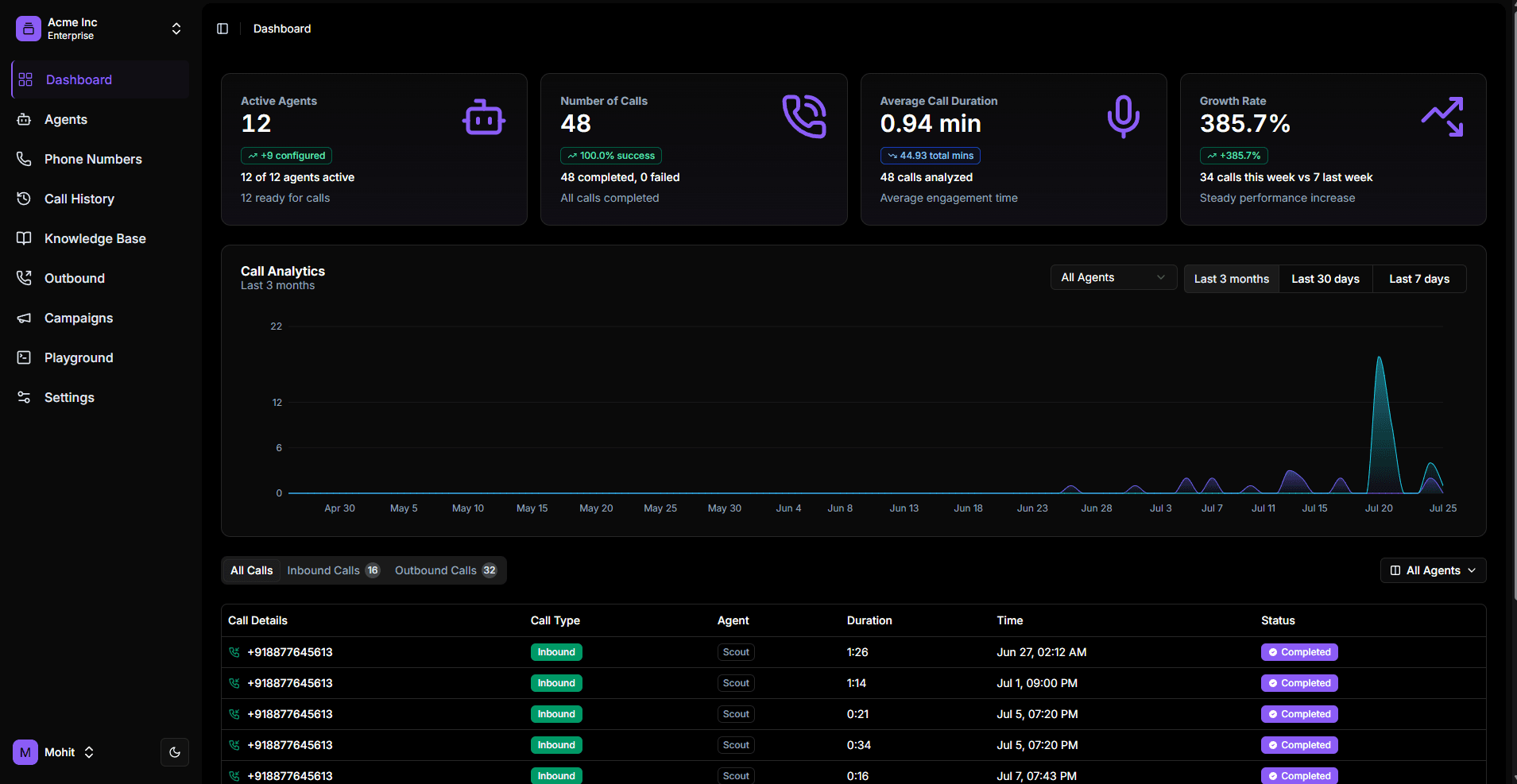
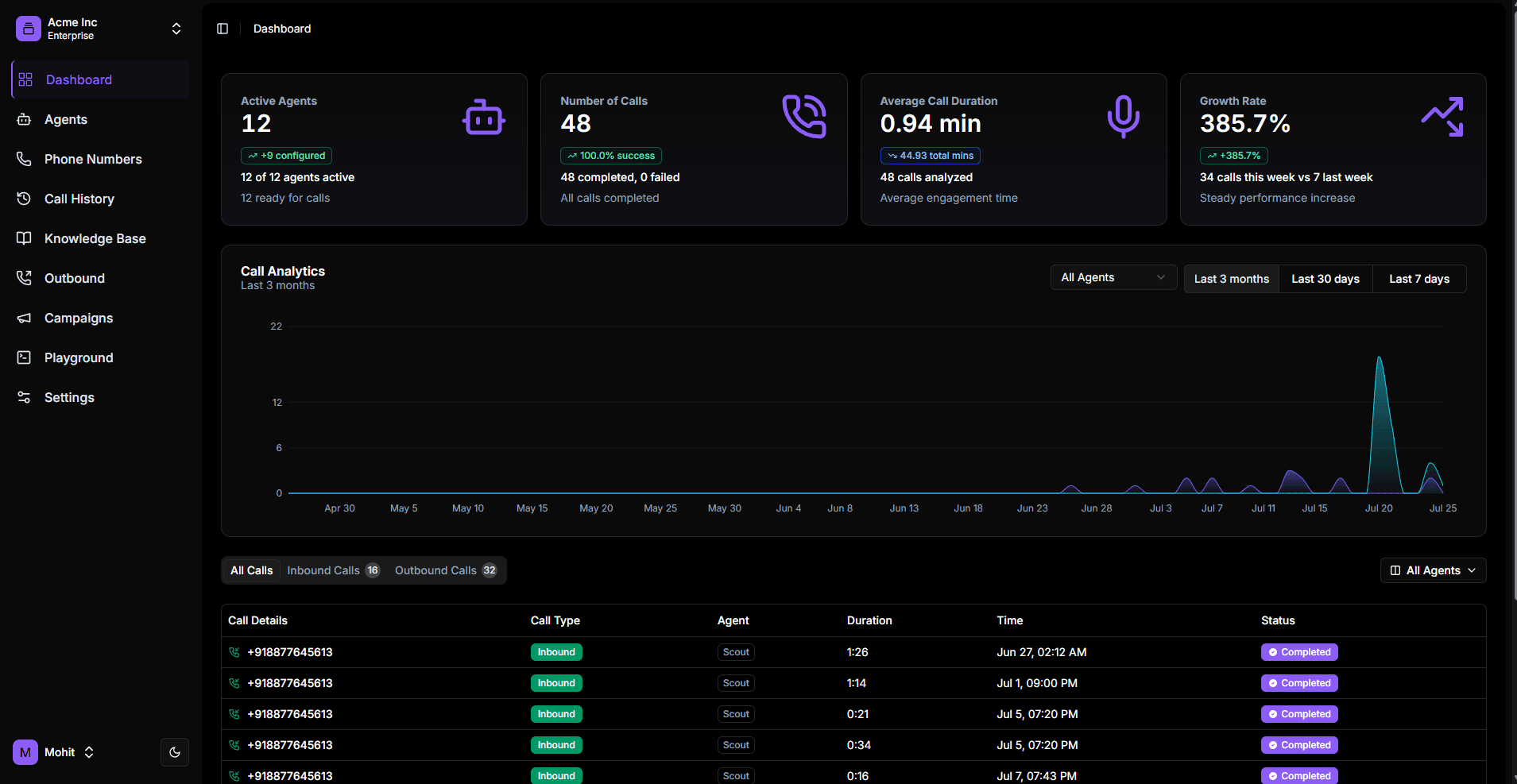
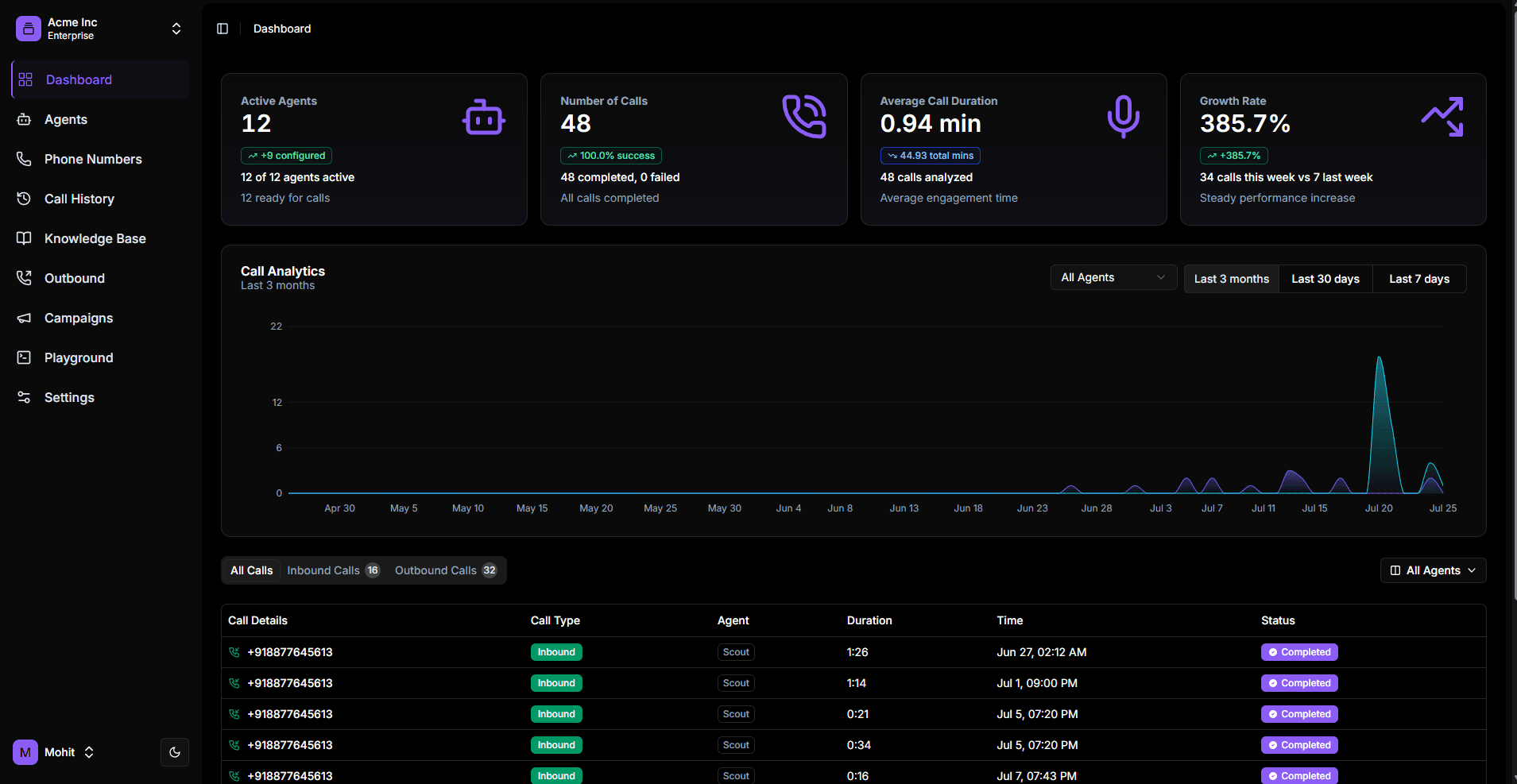
Unified Insights Dashboard
Consolidate voice and chat transcripts into one place. Gain real-time metrics on CSAT, deflection rates, peak volumes, & more to continuously optimize support.
Seamless Context Continuity
Our platform preserves conversation history as customers switch channels. No "starting over". Agents pick up where the last interaction left off.
Effortless Integration into Your Stack
Get up and running in days, not months: choose from our pre-built connectors for Salesforce, Zendesk, Shopify, and more; embed our Web & Mobile SDKs with a few lines of code; or leverage flexible REST APIs and webhooks to wire QuickVoice into any custom workflow.
Frequently Asked Questions
Common questions about AI voice agents in logistics customer support
Discover How QuickVoice Can Transform Your Logistics Operations
Gain insights on how we're helping logistics companies improve efficiency and productivity. Explore the benefits of conversational AI for your business and start transforming your customer experience today.
The Communication Intensity of Logistics Operations
Logistics is one of the most communication-intensive industries on earth. Every shipment generates a cascade of calls and messages: pickup confirmation, in-transit updates, delivery notifications, exception alerts, proof of delivery, and claims processing. For a mid-size 3PL handling 500 shipments per day, that's potentially 2,000–4,000 voice touchpoints daily.
Simultaneously, logistics companies face driver dispatch coordination, carrier capacity calls, broker-shipper communication, and customer service inquiries. The volume is enormous and the consequences of communication failure are expensive — delayed shipments, missed delivery windows, and unhappy customers.
AI voice agents automate the routine, high-volume communication layer, allowing logistics operations teams to focus on exception management and relationship-building.
Logistics Use Cases for AI Voice Agents
Outbound Delivery Notifications
Automated outbound calls to recipients before, during, and after delivery:
- Day-before notification: "Your delivery is scheduled for tomorrow between 2–6 PM. Will someone be available? Would you like to reschedule?"
- Morning of delivery: "Your driver is currently 4 stops away — estimated arrival in 45–60 minutes."
- Delivery confirmation: "Your shipment was delivered at 2:47 PM. A photo of the delivery is available at [link]."
For B2B deliveries requiring dock appointments, AI agents coordinate appointment scheduling with the receiving department.
Shipment Exception Management
When exceptions occur — delays, damaged freight, failed delivery attempts — AI agents proactively notify customers and collect disposition instructions:
- "Your shipment to Denver has been delayed due to weather. We expect it to arrive Thursday instead of Wednesday. Would you like us to attempt delivery anyway or hold at the terminal for pickup?"
- Collect alternative delivery instructions
- Arrange re-delivery scheduling
- Initiate claims process for damaged freight
Driver Dispatch and Load Coordination
For asset-based carriers and last-mile delivery operations, AI agents assist with:
- Load tender confirmation calls to drivers
- Route start/end confirmation
- Break and fuel stop coordination
- Load arrival notifications to shippers
Carrier Capacity and Rate Inquiries
Freight brokers receive dozens to hundreds of daily calls from carriers seeking loads and shippers seeking capacity. AI agents handle:
- Carrier availability confirmation ("Are you open for a Chicago to Dallas load on Friday, approximately 40,000 lbs, dry van?")
- Rate confirmations
- Load detail delivery (pickup time, commodity, special requirements)
- Check-call handling for loads in transit
Customer Service: Inbound Inquiry Handling
Shippers call to check on their freight. Receivers call to inquire about delivery timing. AI agents handle:
- Shipment status inquiries (pulling real-time data from TMS)
- Expected delivery time calculations
- Proof of delivery retrieval
- Claims status updates
TMS and WMS Integration
AI voice agents for logistics deliver maximum value connected to core logistics systems:
Transportation Management Systems:
- Oracle TMS
- MercuryGate
- McLeod Software
- Omnitracs
- project44
- FourKites (for visibility data)
Warehouse Management Systems:
- Manhattan Associates WMS
- Blue Yonder (JDA)
- SAP Extended Warehouse Management
- Korber (HighJump)
Last-Mile Platforms:
- Route4Me
- Onfleet
- Bringg
- Samsara
ROI Model for a Regional LTL Carrier
| Function | Monthly Volume | Automation Rate | Savings |
|---|---|---|---|
| Delivery notifications | 15,000 | 90% | $47,250 |
| Check calls (in-transit) | 8,000 | 75% | $22,500 |
| Exception alerts | 2,500 | 80% | $7,500 |
| Customer status inquiries | 5,000 | 70% | $13,125 |
| Total Monthly Savings | $90,375 |
Annual savings: $1.08M. QuickVoice plan at this volume: ~$5,000/month. ROI: 18x.
Compliance and Regulatory Considerations
Logistics communication is not just a matter of convenience — it is frequently a matter of law. AI voice agents help carriers, brokers, and 3PLs stay compliant with the complex web of federal, state, and international regulations that govern freight movement.
FMCSA Driver Communication Rules
The Federal Motor Carrier Safety Administration (FMCSA) imposes strict requirements on how motor carriers communicate with their drivers. AI voice agents assist by delivering standardized, timestamped communications that create an auditable record. When dispatch instructions change mid-route, the AI agent contacts the driver, confirms receipt of the new instructions, and logs the interaction — ensuring the carrier can demonstrate compliance during audits.
Hours of Service (HOS) Notifications
Under the HOS regulations, drivers must adhere to strict limits on driving time and mandatory rest periods. When ELD data indicates a driver is approaching an HOS limit, the AI agent proactively calls the driver with a reminder: "You have 45 minutes of available drive time remaining. Your nearest approved rest location is the Love's Travel Stop at Exit 142, approximately 30 minutes ahead." These calls reduce HOS violations — which carry penalties of up to $16,000 per occurrence — and improve fleet safety scores.
Hazmat Communication Requirements
Shipments classified as hazardous materials under 49 CFR require specific communication protocols. AI voice agents ensure that every party in the chain of custody — the shipper, carrier, driver, and consignee — receives the required hazmat notification calls. The agent confirms that the driver has acknowledged the placard requirements, the emergency response information is on board, and the receiving facility is prepared for hazmat acceptance.
Customs and Border Documentation Calls
Cross-border freight requires coordination with customs brokers, and missing or incorrect documentation is the leading cause of border delays. AI agents call drivers approaching the border to verify that all paperwork — commercial invoices, bills of lading, certificates of origin, and PARS/PAPS numbers — is complete and accurate. For carriers running lanes between the U.S., Canada, and Mexico, this automation eliminates the majority of documentation-related border holds.
BOL Discrepancy Notification
Bill of Lading discrepancies — mismatched piece counts, weight variances, incorrect commodity codes — create downstream billing disputes and claims. When the TMS flags a BOL discrepancy, the AI agent immediately calls the relevant parties to resolve the issue before the freight moves further down the supply chain. This early intervention reduces freight claims by an average of 35% for QuickVoice customers in the LTL segment.
Seasonal and Peak Volume Management
Logistics communication volume does not stay flat throughout the year. It swings dramatically with seasonal demand, weather events, and global supply chain disruptions. Staffing a call center for peak volume means overstaffing during slow periods — or scrambling to hire and train temporary dispatchers who make costly mistakes. AI voice agents eliminate this problem entirely.
Holiday Shipping Surges (Black Friday through New Year)
The period from late November through early January sees parcel and LTL volumes surge by 40–300% depending on the segment. Last-mile carriers that handle 1,000 stops per day in October may handle 3,000 stops per day in December. AI voice agents scale instantly to match this volume — no recruiting, no training, no overtime pay. Every recipient still receives a personalized delivery notification, every exception is still communicated proactively, and every inbound status inquiry is still answered on the first ring.
Produce Season for Reefer Carriers
Refrigerated carriers experience intense seasonal demand during produce harvest seasons. California strawberry season, Georgia peach season, and Florida citrus season all create spikes in reefer load volume — and a corresponding spike in communication needs. Temperature excursion alerts, load acceptance confirmations, and delivery appointment scheduling all multiply. AI agents handle the surge without degrading response times or accuracy.
Weather Events Causing Widespread Delays
A single major winter storm can delay thousands of shipments simultaneously, triggering an avalanche of inbound calls from anxious shippers and receivers. During Winter Storm Elliott in December 2022, some carriers reported a 600% increase in inbound call volume. AI voice agents absorb this spike effortlessly, providing callers with real-time shipment status pulled directly from the TMS and offering proactive rescheduling options.
Port Congestion Events
When ports experience congestion — as seen during the prolonged disruptions at the Ports of Los Angeles and Long Beach — drayage carriers and intermodal providers face a communication nightmare. Container availability changes hourly, appointment slots shift, and chassis availability fluctuates. AI agents call drivers with updated port instructions, notify shippers of revised container availability, and coordinate with warehouses on adjusted inbound schedules — all in real time.
Instant Scalability Without Temp Dispatchers
The traditional solution to peak volume is hiring temporary dispatchers at $18–25/hour, spending two to four weeks training them, and accepting a higher error rate during the ramp-up period. AI voice agents eliminate this cycle entirely. Whether the operation handles 500 or 5,000 shipments per day, the AI agent delivers consistent, accurate communication at a fraction of the cost. There is no ramp-up period, no training curve, and no post-peak layoffs.
ROI by Logistics Segment
Different logistics segments experience different savings profiles based on their communication volumes, call complexity, and labor costs. The table below compares annual savings across four common logistics operating models.
| Logistics Segment | Daily Volume | Annual Savings | Key Savings Driver |
|---|---|---|---|
| Asset-Based LTL Carrier | 500 shipments/day | $1.08M/year | Delivery notifications, check calls, exception alerts |
| Freight Brokerage | 200 loads/day | $720K/year | Carrier capacity calls, load confirmations, check calls |
| Last-Mile Delivery | 1,000 stops/day | $960K/year | Recipient notifications, re-delivery scheduling, POD confirmation |
| 3PL / Warehouse | 300 clients | $540K/year | Inbound status inquiries, appointment scheduling, inventory alerts |
Asset-Based LTL Carrier (500 shipments/day): The ROI model detailed earlier in this guide applies. Delivery notifications and check calls represent the largest savings categories, with automation rates of 90% and 75% respectively.
Freight Brokerage (200 loads/day): Brokerages spend enormous amounts of time on carrier capacity calls — reaching out to carriers to confirm availability, negotiate rates, and tender loads. AI agents automate the initial outreach and qualification, presenting dispatchers only with confirmed, rate-agreed capacity. Check calls on in-transit loads, which traditionally consume 2–3 hours per dispatcher per day, are fully automated.
Last-Mile Delivery (1,000 stops/day): Last-mile operations generate the highest call volume per shipment because every stop involves recipient communication — pre-delivery notification, ETA updates, failed delivery attempts, and re-scheduling. At 1,000 stops per day, the communication burden is staggering. AI agents reduce failed delivery attempts by 28% through proactive recipient communication alone, and the re-delivery savings compound the ROI further.
3PL / Warehouse (300 clients): Third-party logistics providers field a constant stream of inbound calls from their client base — inventory inquiries, order status checks, appointment scheduling, and receiving notifications. AI agents handle these inquiries by pulling data directly from the WMS, freeing account managers to focus on strategic client relationships rather than routine status calls.
Real-Time Visibility Integration
The most powerful capability of AI voice agents in logistics emerges when they are connected to real-time visibility platforms. Rather than relying on static TMS data that may be hours old, AI agents pull live tracking data to deliver precise, up-to-the-minute information to every caller and every outbound notification.
FourKites Integration
FourKites provides predictive visibility across road, rail, ocean, and air shipments. When connected to QuickVoice, AI voice agents access FourKites data to deliver ETAs that account for real-time traffic, weather, and dwell-time patterns. If FourKites detects that a shipment will miss its delivery window, the AI agent proactively calls the consignee with the revised ETA and offers rescheduling options — often before the carrier's own dispatch team is aware of the delay.
project44 Integration
project44 offers end-to-end supply chain visibility with deep carrier network coverage. AI voice agents leverage project44's exception detection engine to trigger automated outbound calls the moment an exception is identified. Whether the exception is a temperature excursion on a reefer load, an unexpected stop, or a geofence breach, the AI agent notifies the appropriate stakeholder within seconds — not hours.
Samsara Integration
For fleet operators using Samsara's IoT platform, AI voice agents tap into a rich data stream that includes GPS location, engine diagnostics, driver behavior, and environmental sensor readings. This enables highly specific communication: "Your driver is currently 12 miles from the delivery location, traveling at 55 mph on I-70 East. Based on current traffic conditions, estimated arrival is 14 minutes. The trailer temperature has remained at 34°F throughout transit." This level of detail, delivered by voice on demand, transforms the customer experience.
Proactive Exception Notifications
The combination of real-time visibility data and AI voice automation creates a proactive exception management system that operates 24/7. Instead of waiting for customers to call and ask "Where is my freight?", the system detects potential issues — late departures, route deviations, extended dwell times, temperature excursions — and initiates outbound calls automatically. This approach reduces inbound call volume by up to 45% and dramatically improves customer satisfaction scores, because customers receive information before they need to ask for it.
QuickVoice powers communication automation for carriers, 3PLs, brokers, and last-mile delivery operations. Free 14-day trial at console.quickvoice.co/register.
Ready to get started?
No code. No credit card. First agent live in under 30 minutes.
Related Solutions & Industries
Order Status & Returns
Automate shipment tracking and delivery updates
Learn moreOperations Automation
Streamline logistics workflows and coordination
Learn moreCustomer Support
AI-powered support for shipping inquiries
Learn moreE-Commerce
AI voice agents for online retail operations
Learn moreManufacturing & Engineering
AI voice agents for manufacturing operations
Learn more